
Modern, welfare-first puppy training in Newbury.
Evidence-based puppy training which sets you up for life.
The first few weeks with your puppy can be joyus. They can also feel very, very hard. And all the advice out there about what you should and shouldn’t be doing makes things even more confusing.
Should you crate train or not? Why is toilet training so much harder than everyone said it would be? And when your cute puppy turns into a furry land shark at 6pm, how do you stop them chewing on you?
You’re not failing at being a new puppy parent. It’s just that most of the advice out there is contradictory, outdated or not backed up by an understanding of how puppies learn and develop.
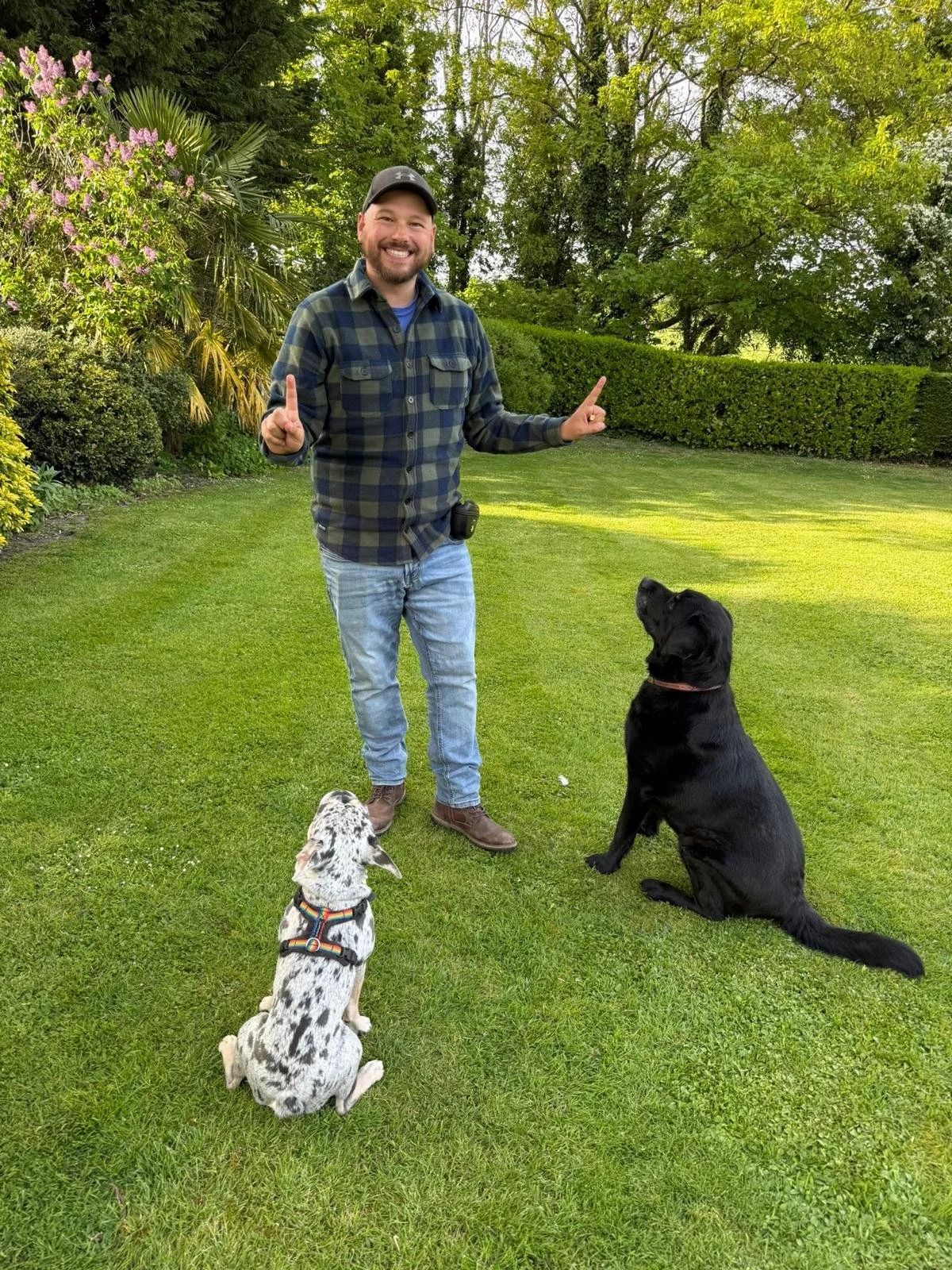
That’s where I come in. Hi I’m Kaelum.
I’m a Newbury-based dog trainer and behaviourist with specialist training in early puppyhood, which means I’m well equipped to support your puppy through the months that shape the dog they’ll grow up to be.
Why is puppy training important?
The first 16 weeks of a puppy’s life are a crucial stage in their development. Getting things right during this time can be the difference between raising a confident, happy dog, and one who grows up to have challenging behavioural issues.
Good quality puppy training isn’t about drilling sits and downs and stays over and over again. Obedience training has its place but these are skills that can be learned later. What’s most important during this time is learning to understand how to best meet your puppy’s needs, how to read their communication, building their confidence, and helping them have positive experiences with the world around them.
A quality trainer will know what you need to prioritise and when, and guide you through each stage. You can’t get these formative first few weeks back, so having the right guidance in place means you get it right the first time.

Frequently asked questions.
Why would my puppy develop behavioural issues? There’s a common misconception that puppies are blank slates. But they aren’t. Every puppy is unique, even within the same litter. Some puppies might be very confident and outgoing, some more weary of the world around them. Understanding how your pup feels as they navigate the world means you can set them up for success and build their confidence at a pace which suits them. The way you treat your puppy also informs their future behaviour, and sometimes, just by following the wrong advice, you can accidently create behavioural issues that need untangling later.
When should I start puppy training? Ideally, at the first possible opportunity. There is no need to wait until your pup is fully vaccinated. Seeking the advice of a trainer before your pup even comes home is really beneficial so you have all the tools in place to set them up for success from the very beginning.
Is it too late if they’re older than 16 weeks? Absolutely not. Sometimes, starting later means spending a bit of time untangling bad habits that might have crept in or topping up any missed socialisation, but it is never too late.
Are puppy classes or one-to-one training better? I personally only work on a one-to-one basis with clients. Every puppy, every home and every person holding the lead will be different. Working one-to-one means I can offer tailored support to each client and give everyone the focus they deserve.
Will you train my puppy for me? My main goal is coaching you, the human, on understanding, training and meeting the needs of your puppy. You’ll be the one living with them, caring for them and bonding with them, so it makes most sense that you learn how to do the training. However, if you need additional hands-on support to help with a certain skill or issue, I can assist you where needed to top up your training.
What methods do you use? I’m a welfare-first, force-free trainer. My practice entails setting dogs up to be successful in their learning, ensuring their needs are met and using practical training skills such as luring, shaping, targeting and capturing to teach behaviours. My methods are evidence based, which means they are supported by the current scientific research into canine behaviour, learning and welfare. You can read more about my Code of Ethics here.
Do you train in-person or online? Both! For my clients in and around Newbury, Berkshire, we’ll likely meet for training sessions in local places, as well as your own home, for real-life practical instruction. For clients further afield or anybody who would prefer virtual training, this is also something I offer. My puppy programmes all have some element of virtual support between sessions.
Puppy training services in Newbury.

Puppy Prep Consultation
A sit-down chat to make sure you and your pup are getting off on the right paw. As standard, this covers all the key best practice about diet, sleep, crate training, toilet training, puppy chewing, preventing problem behaviours and proper socialisation. If you’re just in the research stage and haven’t committed to a puppy yet, we can chat through breeds, finding a reputable breeder, settling your pup in and anything else you need.

Puppy Essentials Programme.
Six weeks of training to help you get the essentials in place. We’ll cover lead walking, recall, impulse control, socialisation, working around distractions and learning to settle. You’ll get a Puppy Prep Consultation included and WhatsApp support for help with any issues between sessions.

The Confident Puppy Programme.
Puppy training done a little differently. This programme takes place over 12 weeks and prioritises guided socialisation, confidence building, bonding and exploration, to lay a rock solid foundation for your training.
How does the WhatsApp Coaching work?
You send me video updates of your training. I take a look and give you coaching on your technique, help to problem solve any issues and give you the next steps. This way, you’re always progressing. It’s day-to-day coaching, rather than always waiting for our next in-person appointment.
It also means that I can drip-feed new exercises gradually, instead of cramming everything into our physical appointments. You and your pup get to work at a pace that’s manageable and natural for both of you.
If you need a demo, I’ll film myself doing it. If there’s useful content elsewhere that will help you, I’ll point you in the right direction. The more you share, the more tailored and effective your coaching becomes.